
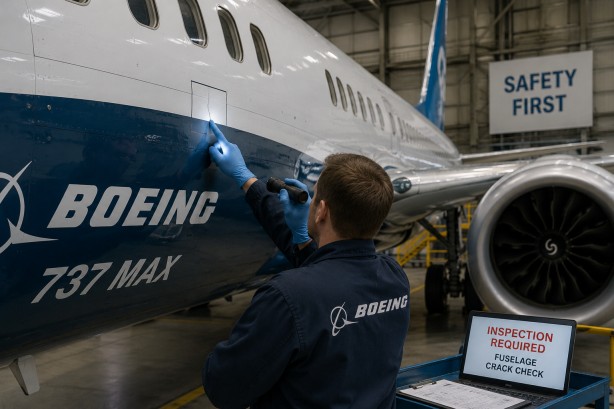
The Federal Aviation Administration (FAA) has issued a directive requiring inspections of the Boeing 737 Max aircraft for potential cracks in a specific structural area of the fuselage. This mandate will impact approximately 471 planes, with inspections slated to commence in September. The focus of these inspections is the bear strap, a structural component that reinforces the fuselage around the exit doors. This component’s design is similar to that found in older Boeing 737 Next Generation models, where similar cracks have previously been detected, leading to inspections of those aircraft as well.
Although no cracks have been reported in the 737 Max fleet to date, the FAA noted that the aircraft’s design and manufacturing processes could allow for similar issues to arise. The agency cautioned that undetected cracks could compromise the structural integrity of the aircraft, posing a potential safety risk. Boeing has been collaborating with airlines on this issue since it was first identified in 2019 and has expressed support for the mandatory inspections. The company stated that these checks are intended to spot and address any problems before they reach a critical stage.
This latest development adds to the ongoing scrutiny surrounding the Boeing 737 Max, which has faced previous safety concerns and manufacturing quality issues. The aircraft was globally grounded after two tragic crashes occurred in 2018 and 2019, which sparked widespread investigations and reforms in aviation safety protocols.
As the inspections begin, both Boeing and aviation regulators are keen on ensuring that any potential risks are mitigated swiftly to maintain the safety and reliability of the 737 Max fleet. The aviation industry continues to monitor developments closely, as the findings from these inspections could influence future regulatory measures and maintenance practices for this aircraft model.