
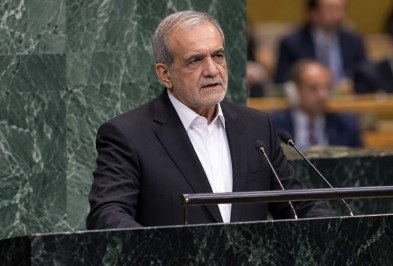
Amid escalating tensions between Iran and the United States, Iranian President Masoud Pezeshkian addressed the United Nations General Assembly, emphasizing Tehran’s openness to dialogue despite criticizing U.S. President Donald Trump’s approach. Pezeshkian expressed Iran’s willingness to engage in diplomatic discussions but condemned any negotiations conducted under threats or military pressure.
The Iranian leader’s remarks followed President Trump’s own address at the UN, where he suggested the possibility of further actions against Iran while also hinting at renewed talks between the two nations. In a move towards diplomacy, Iranian Foreign Minister Abbas Araghchi and U.S. special envoy Steve Witkoff met on the sidelines of the assembly, with Qatari mediation facilitating discussions focused on resolving the ongoing conflict and alleviating pressure on Iran.
Central to these discussions is the situation in the Strait of Hormuz, a critical waterway where disruptions have impacted international shipping and energy markets. Iran has signaled that it could reopen the strait if its conditions, including the cessation of military threats and economic sanctions, are met. The Iranian government insists that their nuclear ambitions are peaceful, aiming only for a civilian nuclear program, and calls for regional cooperation on security independent of external powers.
Pezeshkian also accused the United States and Israel of aggressive actions against Iran, defending his country’s measures as acts of self-defense. The ongoing economic sanctions have significantly strained Iran’s economy, affecting oil exports and leading to increased diplomatic efforts to end hostilities and lift restrictions.
Despite the considerable differences between Washington and Tehran over nuclear matters and sanctions, the latest diplomatic interactions suggest that dialogue remains a viable option. Both nations appear to be exploring avenues to ease tensions, although major disagreements persist.