
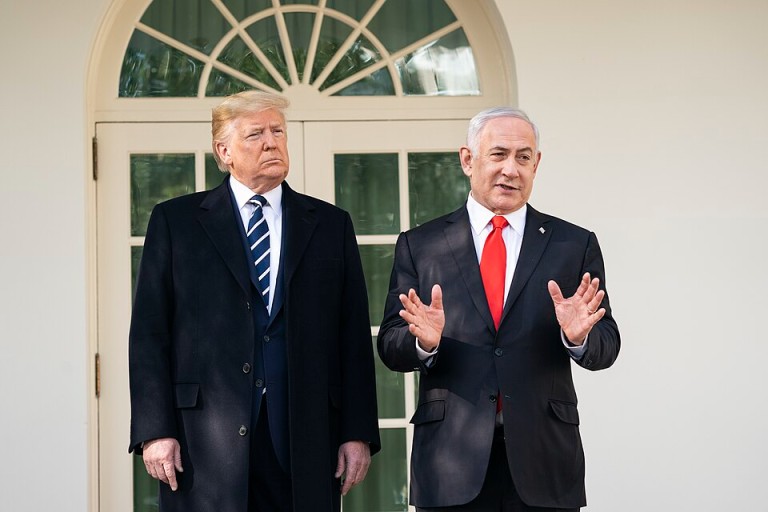
US President Donald Trump has expressed strong disapproval of Israeli Prime Minister Benjamin Netanyahu amid ongoing efforts by the United States and Iran to finalize a peace agreement intended to resolve a conflict that has persisted over three months in West Asia. Trump criticized Netanyahu, describing him as “a very difficult guy,” and voiced his dissatisfaction with Israel’s continued military activities in Lebanon, which he claims are hindering the progress of a ceasefire and a broader peace deal with Iran.
The President highlighted that recent Israeli military actions targeting Beirut have postponed the announcement of the US-Iran agreement, further escalating tensions during a critical phase of negotiations. Trump emphasized the crucial role of American support for Israel but cautioned about the significant security threats that persist in the region. The conflict, which escalated into Lebanon, saw Hezbollah, backed by Iran, entering the fray, resulting in persistent clashes with Israeli forces. This violence has led to the displacement of numerous civilians and heightened concerns regarding regional stability.
Despite headway in the talks between Washington and Tehran, there remains uncertainty about Lebanon’s position in the final agreement. While mediators have suggested that issues related to Lebanon may be addressed in subsequent discussions, Israel has been firm in its stance, asserting its right to independently undertake security measures as it deems necessary.
As part of their negotiations, the United States and Iran have consented to a framework that includes ceasing military operations, reopening the Strait of Hormuz, and lifting restrictions on maritime traffic in the area. The agreement is anticipated to be officially signed in Switzerland later this week. Following the signing, both nations are set to engage in a 60-day negotiation period aimed at addressing unresolved matters, including Iran’s nuclear ambitions and comprehensive regional security strategies.
The prospective deal is under close scrutiny by international markets, as the reopening of the Strait of Hormuz could potentially stabilize energy supplies and alleviate pressure on global oil prices, which have been under strain due to the prolonged disruption. As the world watches, the outcome of these negotiations holds significant implications for the geopolitical landscape and economic stability in the region.