
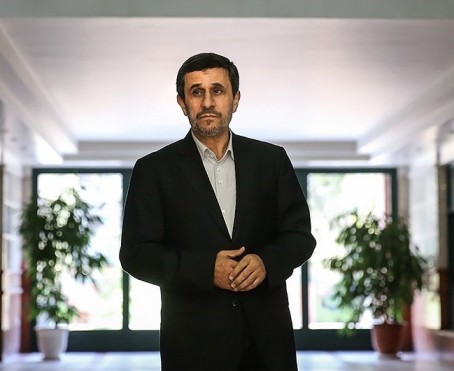
In a surprising twist to the ongoing geopolitical tensions surrounding Iran, claims have surfaced suggesting that Israel attempted to influence Iranian politics by supporting the rise of Mahmoud Ahmadinejad, a figure known for his fiery rhetoric against Israel. Ahmadinejad, who served as Iran’s president from 2005 to 2013, later became a vocal critic of the Iranian regime and an advocate for the impoverished, eventually clashing with Supreme Leader Ali Khamenei. Allegations have emerged that Israel conducted an operation, including the bombing of a security building near Ahmadinejad’s Tehran residence, to facilitate his escape from house arrest, though the former president reportedly grew uneasy with the plan.
These claims, although regarded by some as unlikely or potentially a product of disinformation from Ahmadinejad’s faction or Israeli intelligence, highlight a larger narrative of the U.S. and Israel potentially misjudging the strength of opposition to Iran’s government and their ability to destabilize it through military means. Amidst these developments, U.S. President Donald Trump, dealing with domestic pressure over rising gas prices, has been exploring options to disengage from the conflict while still contemplating further airstrikes to impose his terms on Tehran. Trump’s deliberations included a recent conversation with Israeli Prime Minister Benjamin Netanyahu, touching upon the possible escalation of hostilities.
The broader context sees Iran at odds with the United States over its nuclear program. Tehran insists on deferring talks about its nuclear future and prioritizes sanction relief in exchange for lifting its blockade of the Strait of Hormuz. The U.S. has countered by blockading Iranian ports to curb oil shipments, primarily destined for China, Iran’s key export market. The Islamic Revolutionary Guard Corps has issued warnings of expanding the conflict beyond the region if U.S. actions persist. Meanwhile, Iranian media, casting doubt on the recent claims, reported that Ahmadinejad was not under house arrest, contrary to the narrative of his alleged escape.
Following Israeli airstrikes on Tehran in late February, initial reports falsely suggested Ahmadinejad’s demise in the attack. However, it was later confirmed that a security post near his residence in Narmak was targeted, resulting in his bodyguards’ deaths and minor injuries to Ahmadinejad himself. Speculation arose that Ahmadinejad might leverage the ensuing chaos to reclaim political influence. Despite this, his past denial of the Holocaust and anti-Israeli stance make him an unlikely ally for Netanyahu. Trump’s strategy in Iran appears reminiscent of his approach in Venezuela, where U.S. forces captured leader Nicolás Maduro but left the regime intact, although Ahmadinejad’s contentious rapport with Tehran’s leadership complicates similar undertakings.
Ahmadinejad’s political fortunes waned significantly after a falling out with Khamenei in 2011, followed by the election of Ali Larijani as parliament’s speaker. Disputes over policy and nationalism themes were central to their conflict. Arrested in 2018 for criticizing his successor’s government, Ahmadinejad decried the leaders’ disconnect from public concerns. He has since been barred from running for presidency, including in 2024, and has largely retreated from the political limelight, issuing only subdued criticism of Israeli actions in 2025. Notably, last June, he visited pro-Israel Hungary to deliver a talk, marking one of his rare international appearances since leaving office, an event likely sanctioned by the Iranian government.